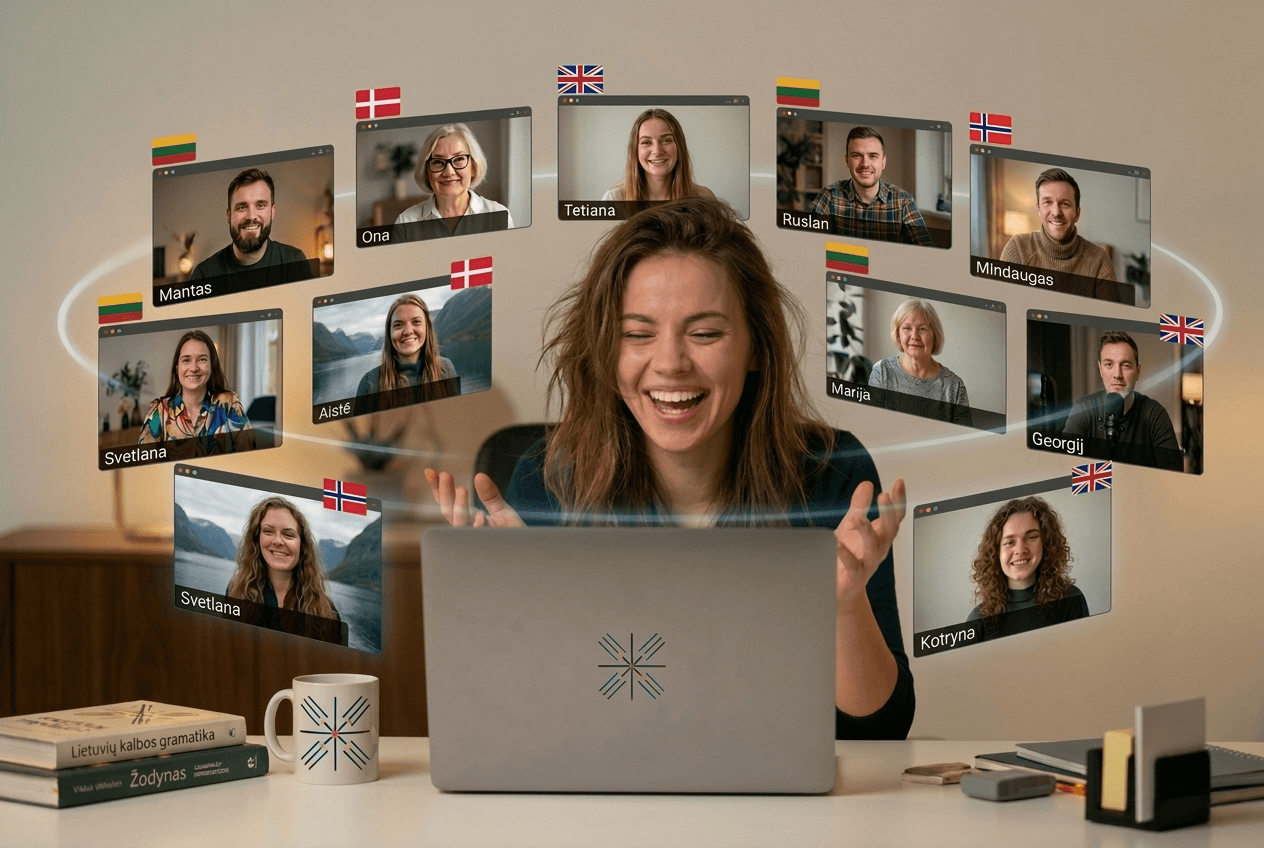
How LABASklabas came about
— How did LABASklabas come into your life?
— LABASklabas “happened” as a spontaneous thought, when I was once again searching for Lithuanian-language courses. Although I passed the A2 exam after just 1.5 years of living in Lithuania, I wanted to develop the skill further. But what was on offer either didn’t match my expectations or cost like “the wing of an airplane”.
I also missed interactivity and proper feedback in the lessons. That’s what I’m now trying to embody on my own platform for spoken Lithuanian practice.
— You run conversation clubs yourself. Is your level of Lithuanian enough to keep a conversation going?
— I don’t hide from users that I’m still learning, and I see that this honesty is appreciated. Of course, it’s nice to hear from Lithuanians themselves that I speak Lithuanian as if I’d lived in Lithuania not 3 but 10 years, and they even ask which part of Lithuania I’m from — possibly because of the accent)
You’ve probably already noticed that Lithuanians love it when foreigners can say a simple “Laba diena” or “Viso gero”. See for yourself: want a charge of positive energy? Talk to Lithuanians in Lithuanian! They’ll praise you head to toe, lift your self-esteem, and somewhere even give you a discount. That’s not a joke.
The core idea of LABASklabas is that users who speak Lithuanian at B2 and above organise meetings on the platform for those who want to understand Lithuanian and start speaking it freely.
I knew the format was new and it would take time for people to grasp its value. Judging by the growing number of participants, I picked the right direction — and I’m really glad the club has been useful from the very start.
Sessions happen on the platform almost every day, and in time I hope there will be even more of them.
That’s why I’m looking for people who speak Lithuanian fluently and find it interesting to take part in this kind of experiment. Ideally Lithuanians themselves — because, living in the same country, we hardly know each other at all. The LABASklabas site has a Become a host form.
And here it’s important for Lithuanians themselves not to be afraid. To run a club you don’t have to be a professional teacher — what matters more is being attentive to the conversation and to the people themselves. So I’m actually glad it didn’t turn out as yet another set of academic courses, but a real, living conversation club where we learn to string words into sentences and discuss interesting and current topics.
How meetings are structured
— How are the club’s meetings organised?
— All LABASklabas meetings happen online. That means users can join the conversations whenever and from wherever it’s convenient. When I talked to other immigrants, they emphasised that they don’t mind attending such classes, but the time isn’t right, or it’s too far to travel. You can keep talking about reasons all day, but my situation is exactly the same. No free Saturday conversation club with coffee and cookies will tempt you if you live in Žirmūnai while the lessons are in Karoliniškės and start at 19:00. And if you’re a mother — especially a working mother — it’s simply not realistic, at least in my case.
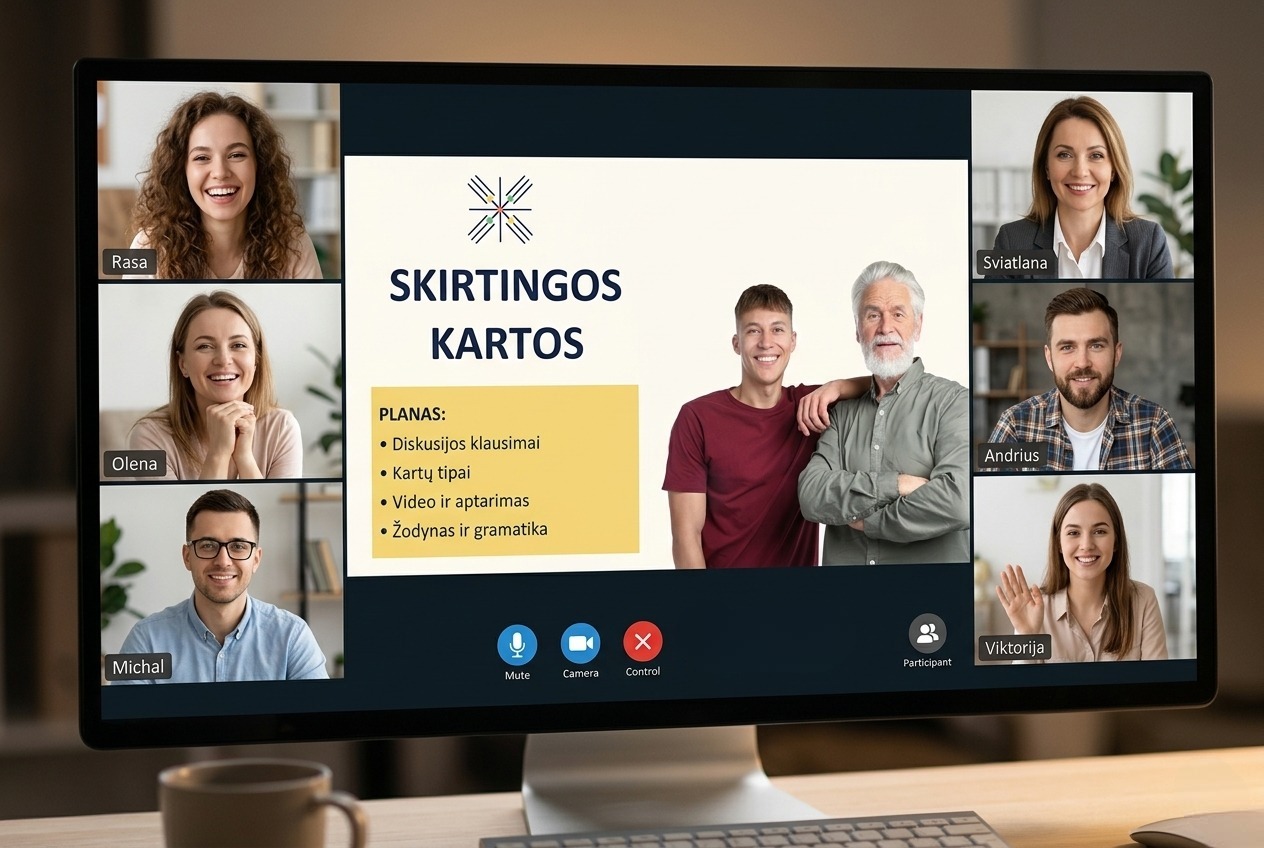

Flexible formats are one of the online club’s key advantages. Everyone can choose a convenient time, an interesting topic, and a host who’s easy to start speaking with.
So we developed what I see as the most convenient way for everyone — both for the hosts of the clubs and for their attendees. The host can set the meeting time on the platform and pick a topic. The visitor can choose a level from A1 to B2, a topic that interests them, a date, and join the conversation at the appointed time.
The cost of joining a conversation club is from 3-5 euros depending on group size and the host’s qualifications. For now all the income is reinvested into the platform’s development. Still, I haven’t lost hope that Lithuanian businesses will join our cause — those who need to integrate their employees into the local environment. And, perhaps, educational organisations who want to tell foreigners about traditions and life in Lithuania.
Who comes to the club
— Who is your typical user?
— An immigrant) And not only from Eastern Europe. The hosts also speak English; teacher Rasa doesn’t know Russian at all, but she can keep a conversation going in French or Italian.
I think the club could be useful even for Lithuanians living abroad who want to keep up their native language or who want to come back home.
But the main mass is, of course, Russian-speaking users — they make up the majority of immigrants in Lithuania today. And again it’s a good thing that LABASklabas is available online. We have many participants from different towns in Lithuania where there may not be as many language initiatives as in the capital.
— Are there students whose stories really got to you?
— Yes. There was a girl from Ukraine, it was hard for her to speak, but she’s a real trooper, she tried so hard. I asked her some question, silence hung in the air, and suddenly, with a heavy, breaking voice, she breathed out: “I want to go home”. Honestly, I almost cried.
But it’s all not in vain. We live here and now, we learn to enjoy every ray of sunshine, as if we’re standing on our feet again, putting down roots. And, of course, we learn Lithuanian, because we live in Lithuania, we respect the Lithuanians who took us in, and I’m sincerely grateful to them.
Stereotypes and the fear of mistakes
— What problems did you run into while building the platform?
— I wouldn’t call them problems, but there are certain stereotypes in society that people use to box themselves in — both students and teachers.
Stereotype 1: Lithuanian is a very difficult language
Just take this: foreigners are told everywhere that Lithuanian is a difficult language. In essence, it’s just as difficult as German, French, Spanish, or any other language in the world. There’s no easy language if it isn’t your native one.
So you need to part with this prejudice and start speaking.
Stereotype 2: Mistakes are a sign of unprofessionalism
There was a recent good example: stickers were put up around Vilnius for foreigners with Lithuanian words, so they could learn and remember translations. But “pilis”, for instance, was translated as “tower”, although “tower” in Lithuanian is actually “bokštas”.
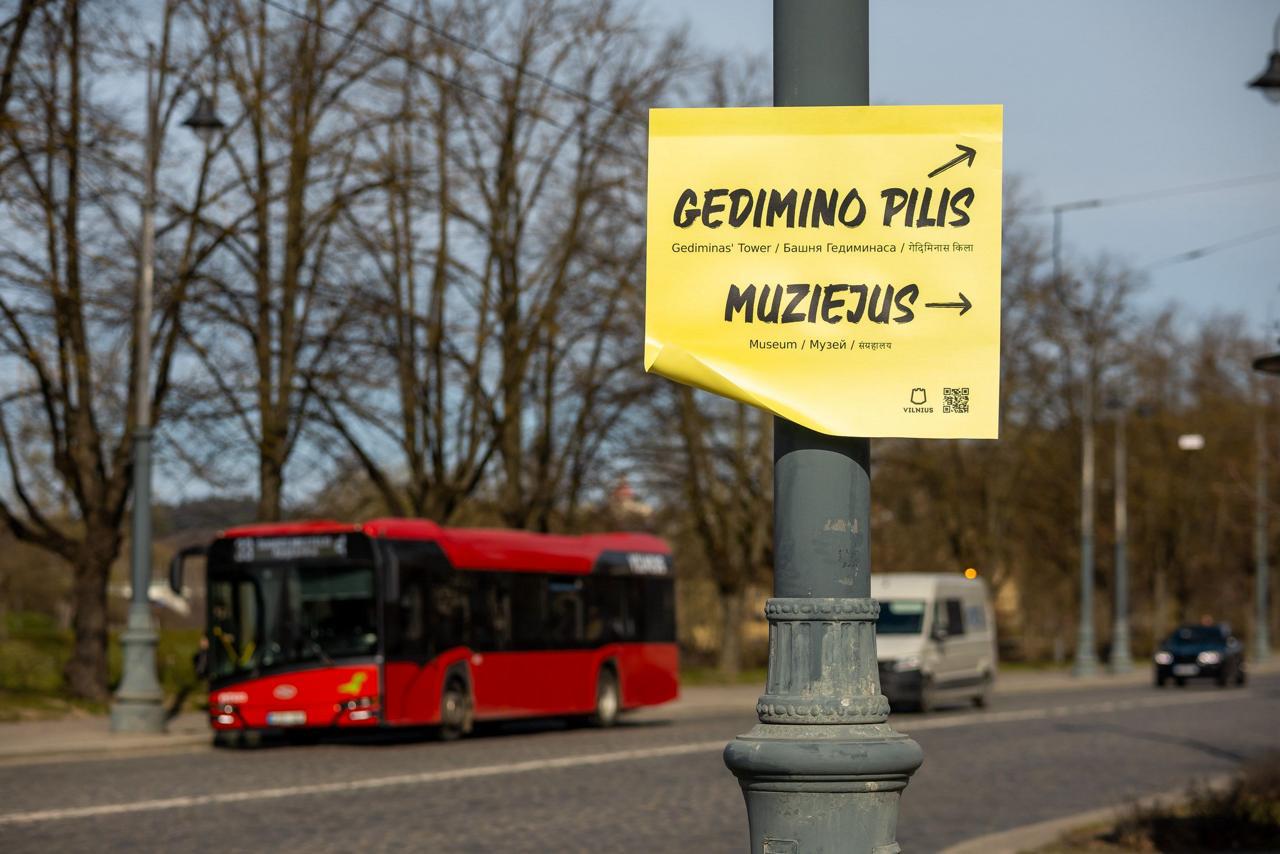
That said, it’s a really cool idea, and thanks to the city — but even here we can see that natives themselves make mistakes. And note: they don’t really worry about it.
Stereotype 3: Learning foreign languages isn’t for everyone
In fact, language “comes” where there’s interest. When the format is engaging, people start speaking on their own — one participant admitted she’d happily discuss these topics even in her native language.
I think it’s always useful for both language-course teachers and conversation-club hosts to engage imagination, try out AI tools, build a lesson so that it’s interesting first of all to us ourselves.
Where the materials come from
— On the topic of materials. Do you create them yourself or use someone else’s work?
— There’s a base you can’t avoid. But even that I try to interpret in my own way, so it would be understandable to me, a “non-native” speaker. I really like a thought from the Lithuanian historian Rūstis Kamuntavičius, who said: if you want to learn something, forget about textbooks. He’s exaggerating, of course — he writes those textbooks himself — but there’s some truth in his words. Our environment is constantly changing, and teaching approaches change with it. If a teacher fails to interest a student, the student will simply lose attention — skip lessons or get bored in class.
That’s why a teacher is first of all a creator, an artist, like Michelangelo. How they “sculpt” the learning process largely determines the result.
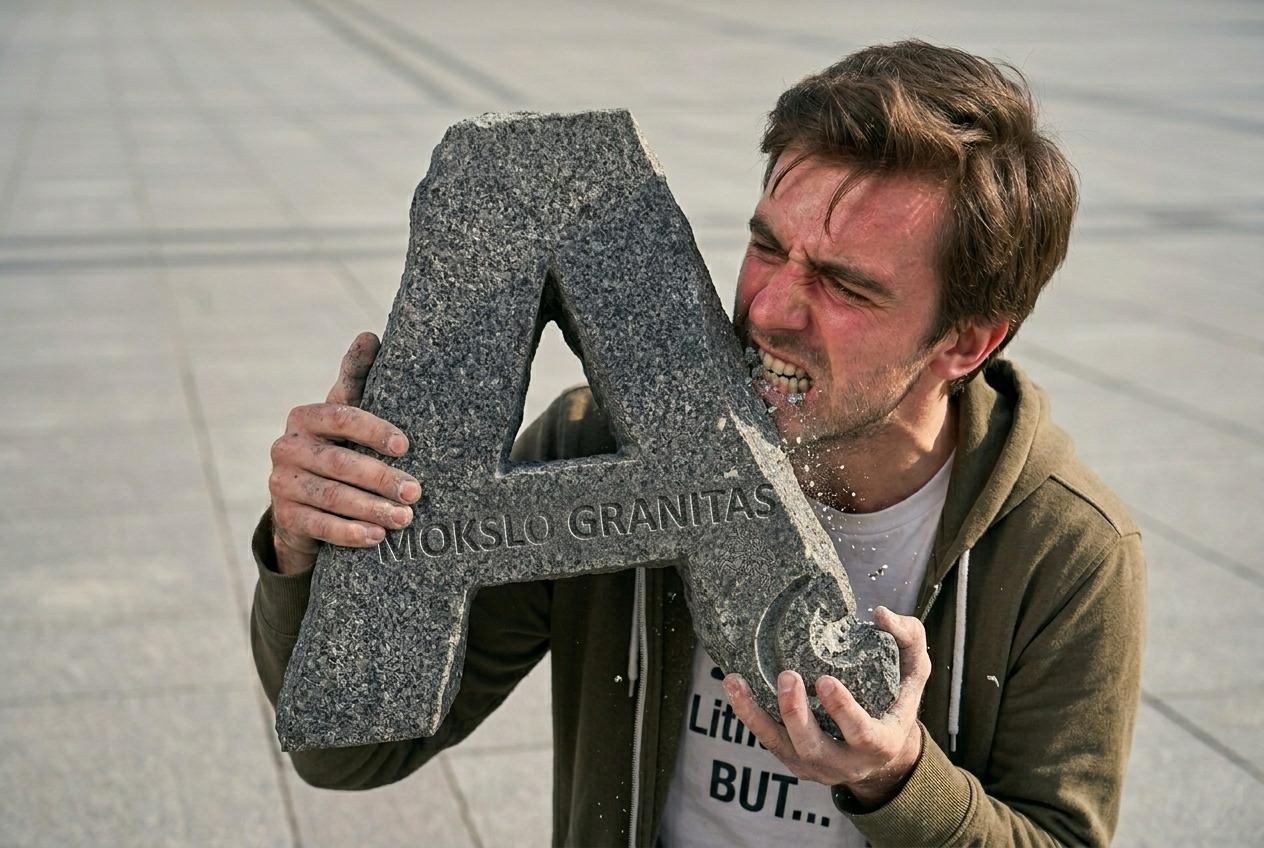
Katya actively generates witty pieces of art for her sessions using neural networks, for which she sometimes even gets pushback. But these have already become the project’s calling card.
The path to the role of teacher
— Did you ever picture yourself as a teacher?
— When the time came to apply to university, there was a scandal in my family. My relatives insisted I go into pedagogy, that being a teacher is a respected and honourable profession, even if not very well paid. Of course, I didn’t see myself in that role. What’s more, I didn’t see myself in that role just a couple of months ago. But I really love languages. When I moved to Vilnius, I realised that here, speaking at least 3 languages is a sign of good form. And most of my Lithuanian friends speak 4 or 5 languages — it’s almost the norm. I thought to myself: how cool, why don’t Belarusians do this?)
So in my life, alongside English, Russian and Belarusian, came Lithuanian and Polish. And it broadens the horizons so much, makes mutual understanding so much easier, you can feel the mutual loyalty and respect between people — it’s hard to put into words.
And of course I want to share this feeling with others. I hope I’m managing.