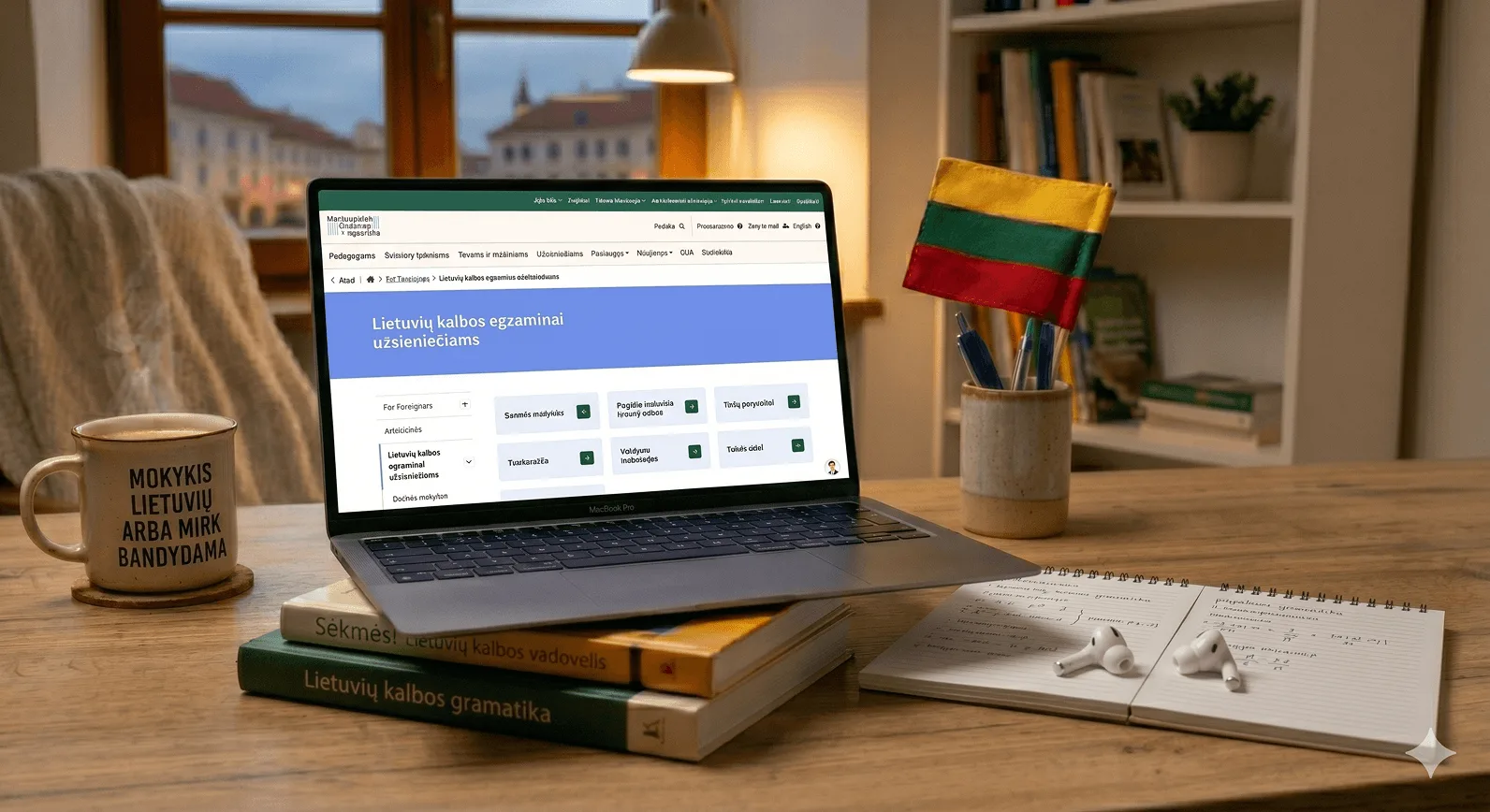
Which Exam Do You Need
Before registering, it helps to know which exam applies to your situation — requirements differ by use case.
Residence permit or citizenship
Work in Lithuania
Required level depends on your role:
What Order — Language or Constitution?
Either order. You used to have to take Lithuanian first, but that rule has been cancelled — both exams can now be taken in any order.
MIGRIS or NSA — Which to Choose?
You can register through two official portals: certificates from either are accepted everywhere equally.
NSA usually has more available slots and a personal cabinet where results appear. MIGRIS is often simpler if you already have an account from handling other migration documents.
Both portals require login via e-banking, an eID card, or Smart-ID. Without a Lithuanian ID, bank account, or Smart-ID, the process simply isn’t possible — that’s a technical requirement of both portals.
Important: the choice between portals applies to the language exams. Registration for the Constitution exam is via MIGRIS only.
The full 2026 exam schedule is available as the official NSA PDF and as an interactive calendar on our homepage — both fully match the official document.
MIGRIS: Step-by-Step Registration Guide
What follows is a detailed walkthrough with screenshots, using the language exam as an example. The Constitution exam process works the same way — only the dropdown selection differs.
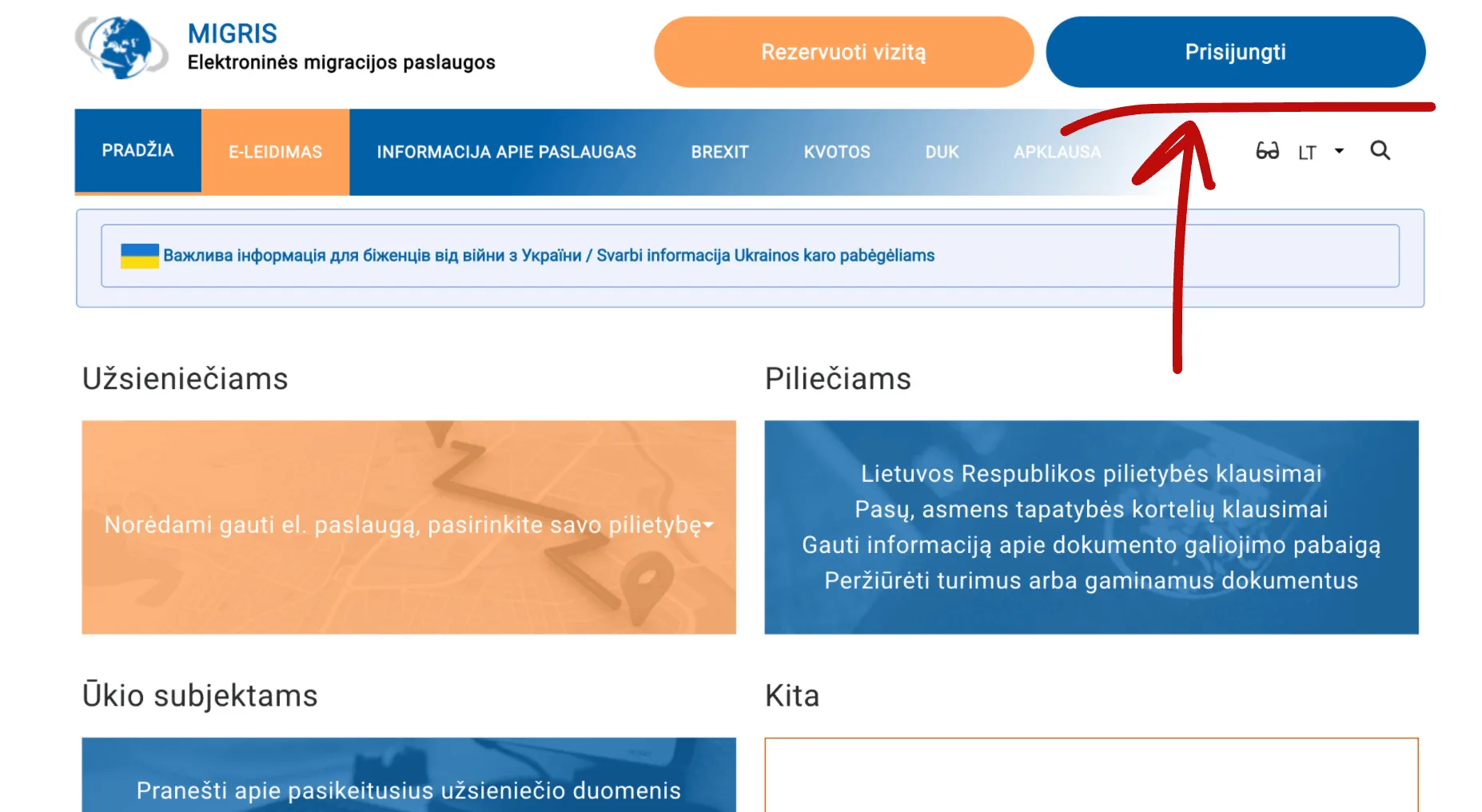
Log in to your MIGRIS account
Open migracija.lt and log in via e-banking, eID, or Smart-ID. If this is your first time here, you’ll need to create an account first.
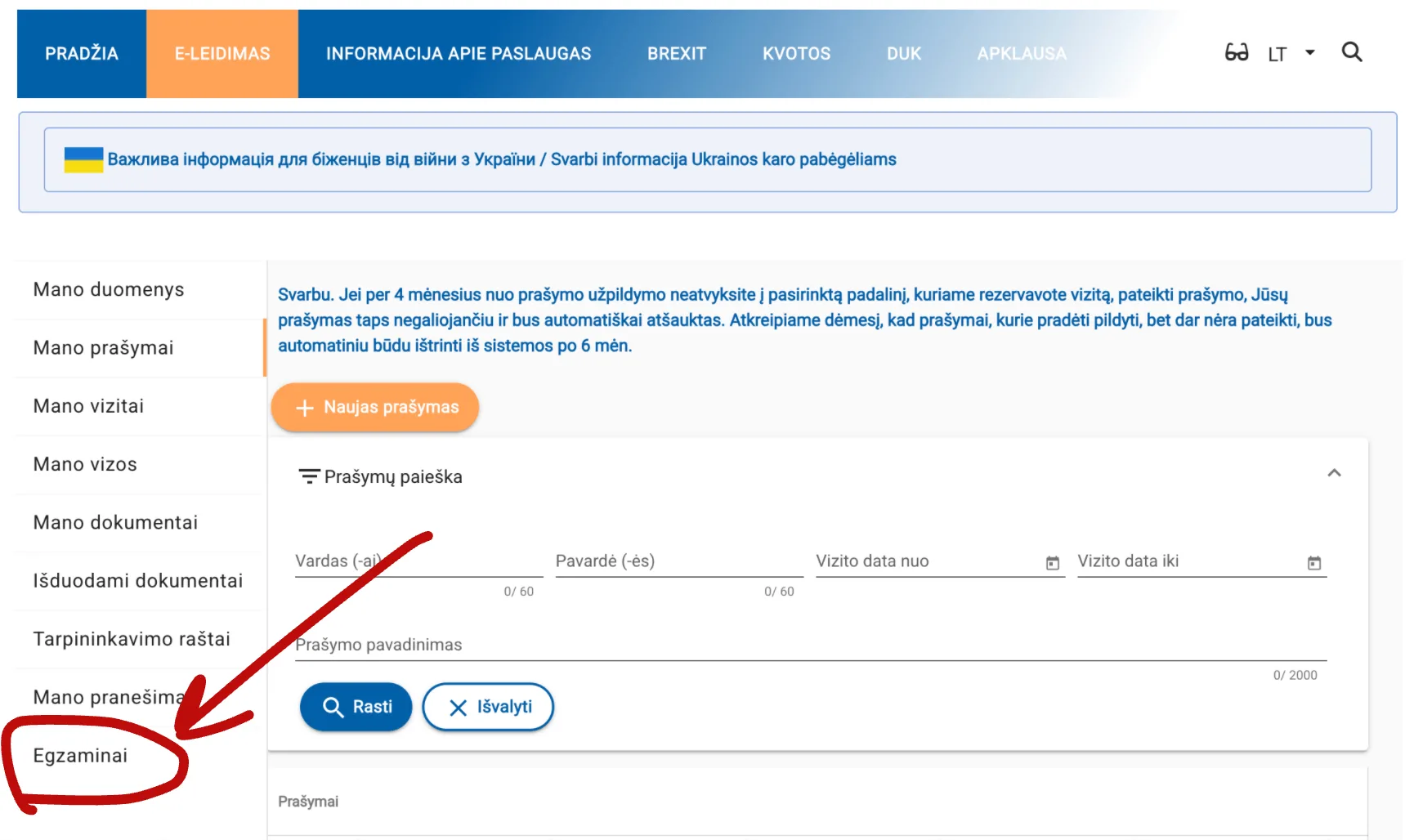
Open the “Egzaminai” section from the top menu
Once logged in, you’ll see "Egzaminai" (Exams) in the top navigation menu. Click it.
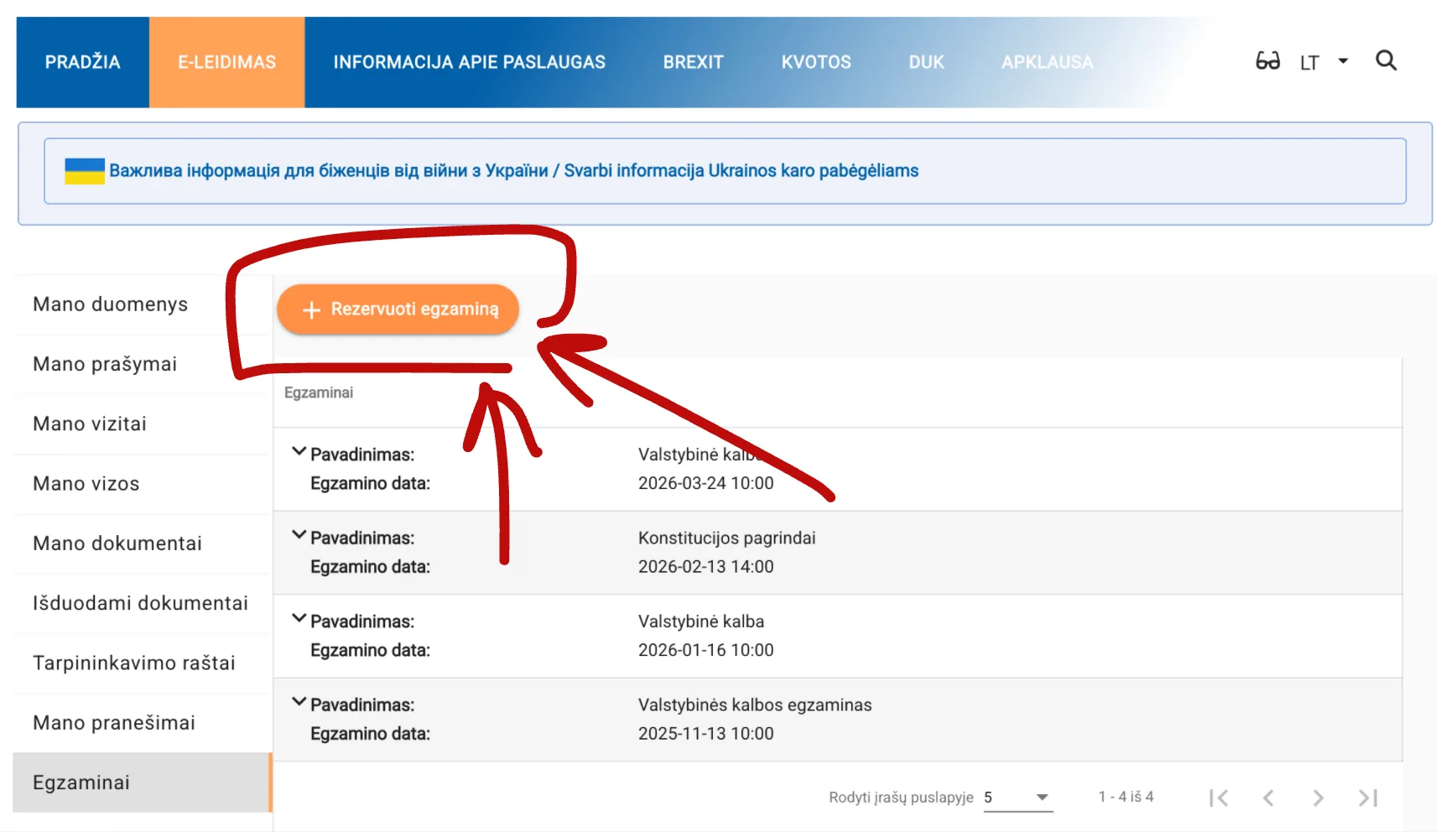
Click the big orange “Rezervuoti egzaminą” button
The Exams page has a large orange "Rezervuoti egzaminą" (Reserve exam) button — hard to miss. Click it to move on to selecting an exam.
Choose the exam type
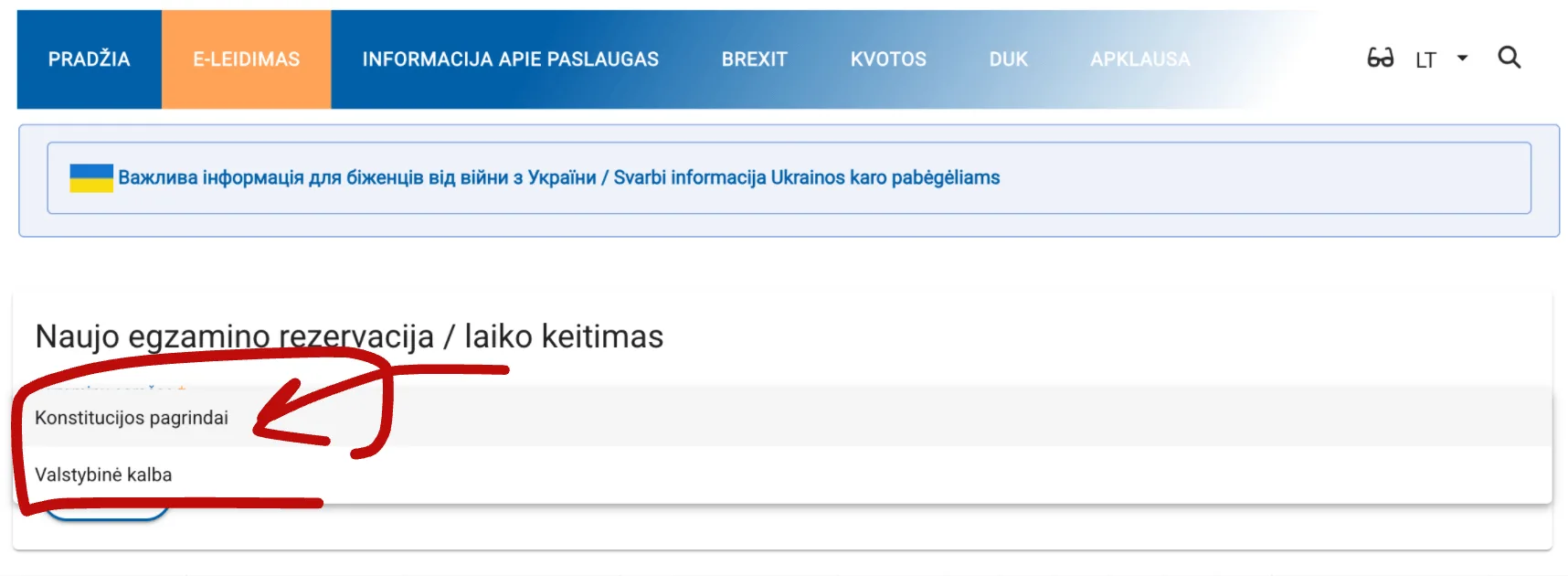
Open the Egzaminų sąrašas (Exam list) dropdown — two options: Konstitucijos pagrindai (Constitution Basics) or Valstybinė kalba (State Language).
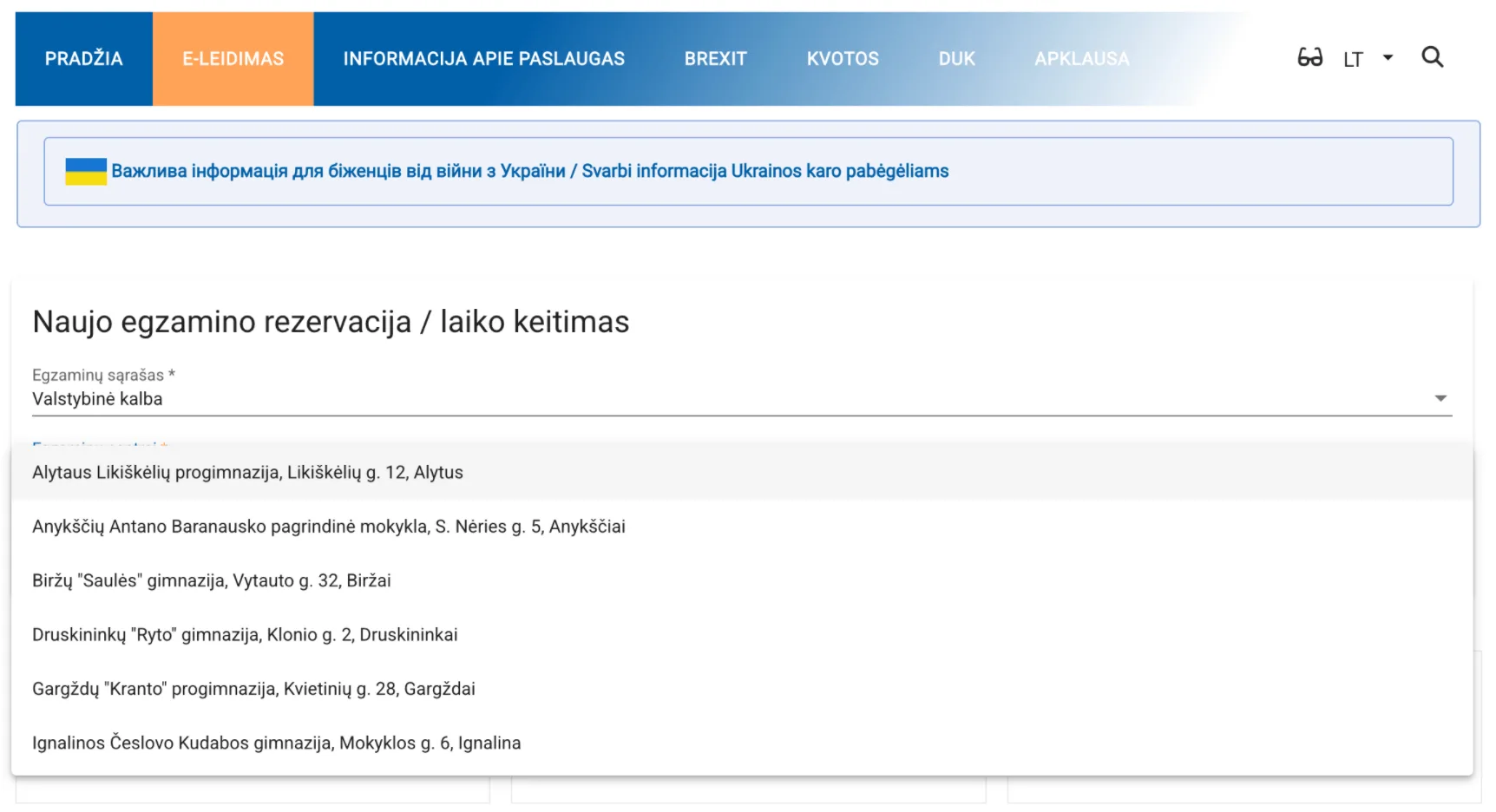
Pick a venue in the “Egzaminų centras” dropdown
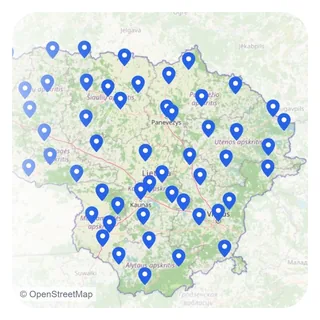
The second dropdown Egzaminų centras (Exam venue) is not user-friendly: addresses are listed without their cities, and it’s hard to tell at a glance which entry is where. Easier to cross-check against our interactive map of 57 exam centers, where every address comes with its city.
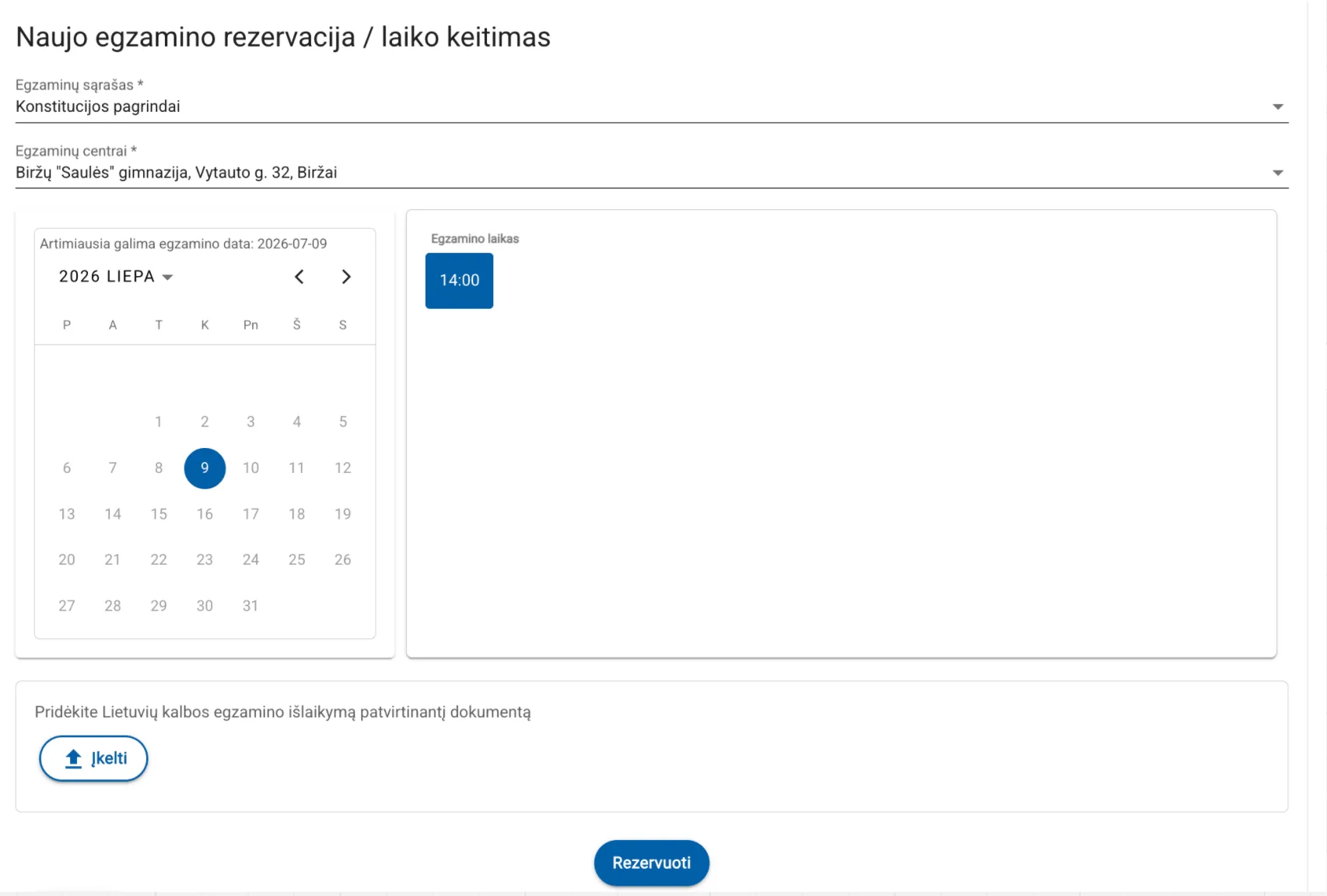
Pick a date, time, and click “Rezervuoti"
Once exam type and venue are chosen, available dates and times appear. Pick what fits you and click the "Rezervuoti" (Reserve) button at the bottom — that locks the slot for you.
Pay for the exam
After reservation, the exam appears in your personal account with the status “Rezervuotas”. Click "Atlikti mokėjimą" (Make payment) and pay — without payment, the registration won’t be finalized.
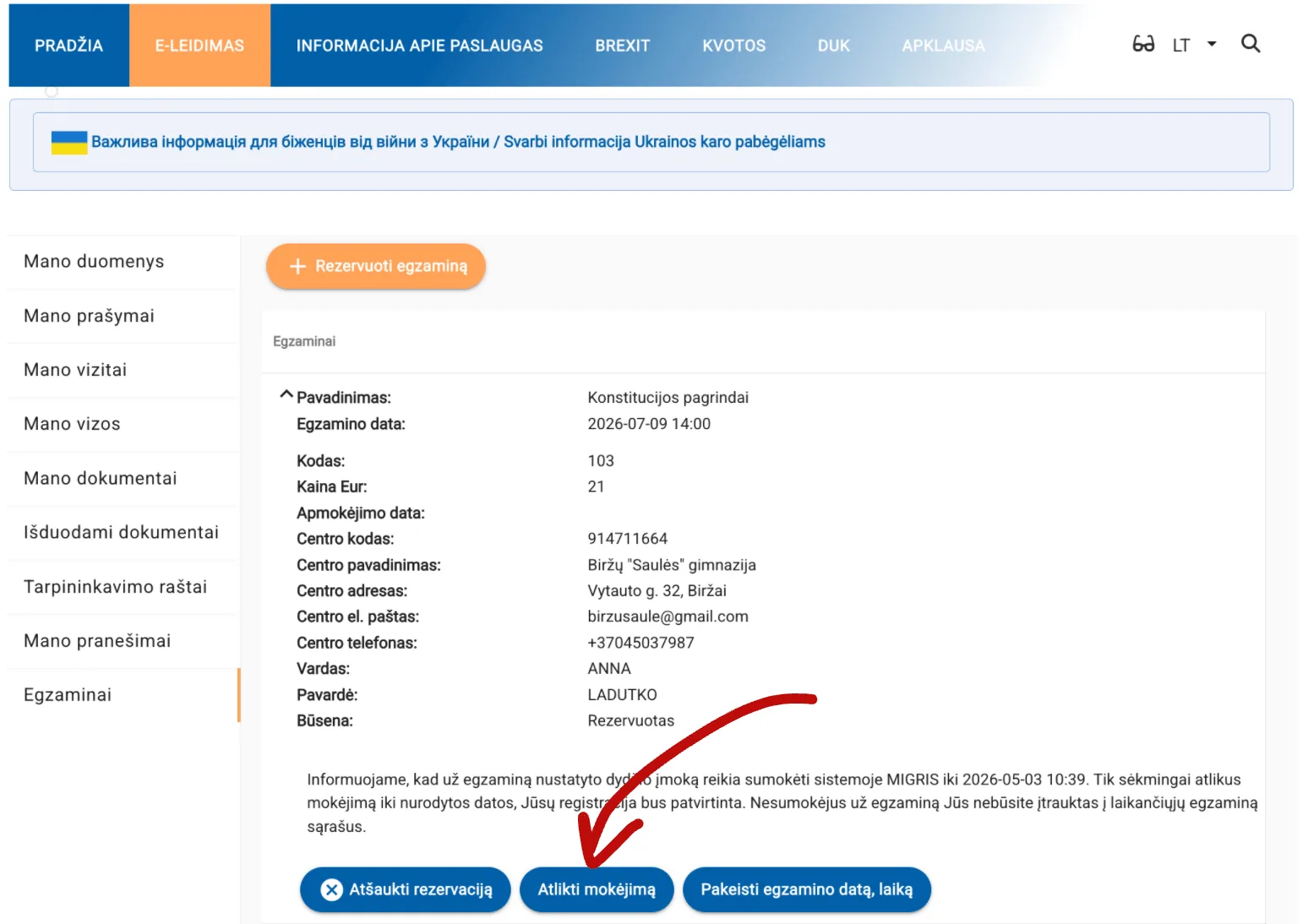
In this example we registered for the language exam — the fee depends on level and is shown on the portal at payment time (on the screenshot of the final step it’s €57 for level A2). The Constitution exam fee is €21.
Deadline: MIGRIS registration closes no later than 15 calendar days before the exam date.
NSA: Step-by-Step Registration Guide
Through eksternams.nsa.smm.lt the process is shorter:
- Create an account or log in via e-banking, eID, or Smart-ID
- Pick an exam level and a convenient date from what’s available
- Pay within 24 hours of registering — otherwise the booking is automatically released
NSA has its own video walkthrough of the registration:
NSA deadline: registration opens 30 days before the exam and closes 7 days before. Each exam has up to 800 spots across Lithuania.
Where You Can Take the Exam
You can take the exam at any of the 57 centers across Lithuania — there’s no requirement tying you to your place of residence or registration. Pick the center that’s most convenient for you: nearest home, on your commute, in the city where friends live.
Larger cities (Vilnius, Kaunas, Klaipėda) have multiple centers; smaller towns usually have just one. Spots fill fast, especially close to the exam windows, so it makes sense to register as soon as registration opens. If your city is full, neighboring cities usually still have open spots.
After the Exam: Results and Certificate
Written parts (reading and writing, listening) — on the computer, with results visible immediately on screen.
Speaking — in person with an interviewer. Results within 15 business days, published in your personal account.
Constitution — a computer test, results immediately.
The certificate is issued by NSA within 7 business days after results are published. The certificate has no expiration date — once you pass, you keep it for life.

FAQ

You’re probably not ready to register for the exams yet — and that’s perfectly fine.
The Lithuanian language and Constitution exams are needed to get permanent residence or citizenship. And permanent residence is granted only after 5 years of living in Lithuania on a temporary residence permit. If you don’t have a Lithuanian ID, bank account, or Smart-ID yet, that means you’ve either just moved and are still sorting out documents, or you’ve been living in Lithuania for a relatively short time. Either way, the natural sequence is: residence permit first → bank account → Smart-ID → and only then exam registration.
The good news: that’s plenty of time to bring your Lithuanian up to A2 calmly, so by the time the exam matters, you arrive ready.